
By Robin Sarratt, President & CEO, LancasterHistory
What does it mean to be an engaged citizen? Voting, volunteering, serving on a board, attending a public meeting, or advocating for a cause are all important expressions of civic engagement. But meaningful participation in our communities begins with something even more fundamental: understanding the people, events, and ideas that have shaped the world we share. That’s where history comes in.
History helps us understand how our communities came to be, why our institutions work as they do, and how generations before us confronted challenges, made decisions, and shaped the future. It reminds us that progress is rarely inevitable, that democracy requires participation, and that ordinary people have extraordinary power to influence the course of events.
At LancasterHistory, we believe that understanding history is itself an act of civic engagement. Through our museums, historic sites, Research Center, educational programs, and community partnerships, we invite people to explore the past, ask difficult questions, encounter different perspectives, and consider their own roles in shaping the future. Whether researching a family story, exploring the presidency of James Buchanan at Wheatland, attending a public lecture, or participating in a community conversation, visitors discover that history isn’t simply something that happened. It’s something we inherit, interpret, and carry forward.
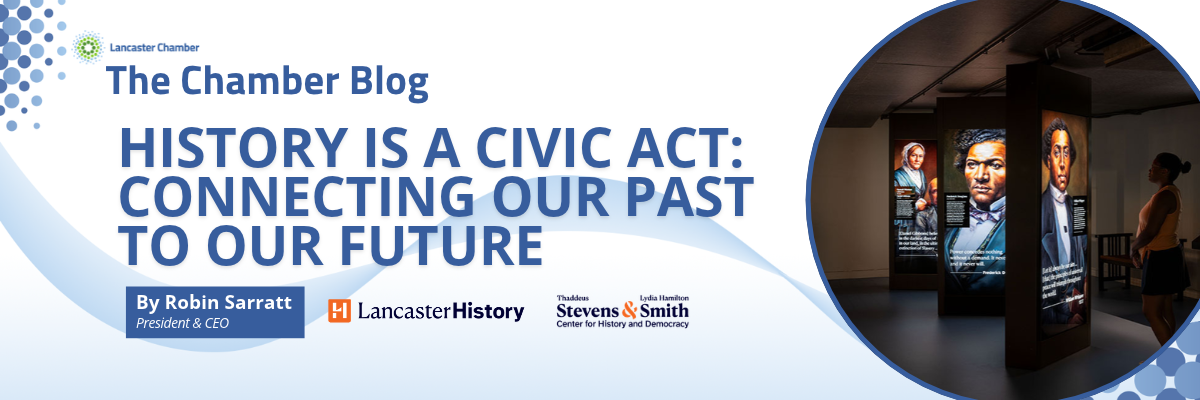
That philosophy is at the heart of our newest museum, the Thaddeus Stevens & Lydia Hamilton Smith Center for History and Democracy, which opened in downtown Lancaster in May 2026. Across sixteen galleries, the Stevens & Smith Center explores one of the most consequential periods in American history: the decades surrounding the Civil War and Reconstruction, when Americans confronted fundamental questions about freedom, equality, citizenship, and the meaning of democracy. Through the stories of Stevens, Smith, and the remarkable community in which they lived, visitors encounter people who challenged injustice, organized for change, defended their convictions, and helped redefine the nation’s founding promises. Their stories remind us that democracy has never been a finished achievement. It is an ongoing endeavor, shaped by the choices and actions of each generation.
Perhaps that’s history’s greatest contribution to civic life: it helps us recognize that we, too, have a role to play. Civic engagement doesn’t require everyone to agree. It asks us to remain curious, listen thoughtfully, understand our shared history, and recognize our responsibility to one another. At LancasterHistory, we hope every visitor leaves not only knowing more about the past, but also feeling more connected to their community—and more confident in their ability to help shape its future.
Because history belongs to all of us. And so does the future.
PS Thaddeus Stevens and his peers fought tirelessly to expand and defend access to voting rights. On Tuesday, November 3, channel your inner Stevens and VOTE!
Lancaster Chamber’s Election Guide is a free resource to learn more about the current election landscape, the elections process, candidate information, and how to ensure your vote is counted.
Learn more: LancasterHistory | Stevens & Smith Center


not secure